Choosing between a PPSU, PP or glass baby bottle comes down to how each material handles heat, sterilising, safety and everyday handling. PPSU is a lightweight high-heat plastic that resists repeated sterilising, PP is a light and affordable everyday plastic, and glass is heavy but chemically inert and long lasting. A fourth material, T-Ester, is now appearing on shelves as a lightweight plastic with glass-like clarity built for UV sterilising.
For a Malaysian parent standing in the baby aisle, the material printed on the base of a feeding bottle can feel like a technical footnote. It is not. The material decides how often you can sterilise the bottle before it wears out, how much it weighs in a diaper bag, whether it survives a fall onto kitchen tiles, and how it behaves when you pour in hot water. This guide compares the materials so you can match the right bottle to your routine.
What PPSU, PP, Glass and T-Ester Actually Are
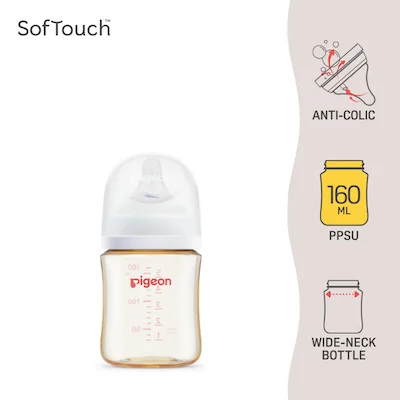
PPSU stands for polyphenylsulfone, a high-performance plastic from the polysulfone family. It is the same class of material trusted in hospital settings, where components made from it can withstand more than 1,000 cycles of steam sterilisation without becoming brittle or yellow, a level of durability that is remarkable for a thermoplastic. That heat tolerance is why PPSU has moved into premium baby bottles.
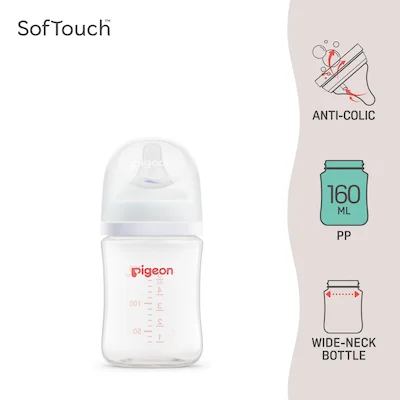
PP stands for polypropylene, the most common plastic used for baby bottles worldwide. It is lightweight, flexible and inexpensive, and it carries the recycling number 5, one of the plastics that health authorities point parents toward as a safer everyday choice. PP is opaque rather than crystal clear, which is a visual trade-off rather than a safety one.
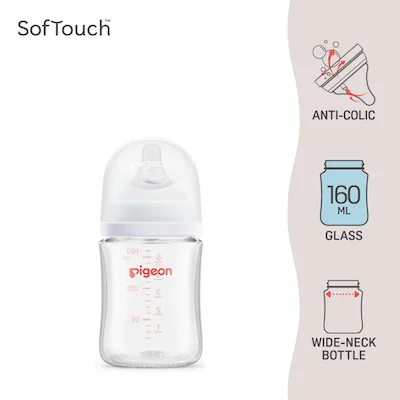
Glass in baby bottles is typically borosilicate. Glass is chemically inert, meaning it does not react with milk or leach material into the feed, and it tolerates high temperatures well. Its weakness is obvious the first time a bottle slips out of wet hands.
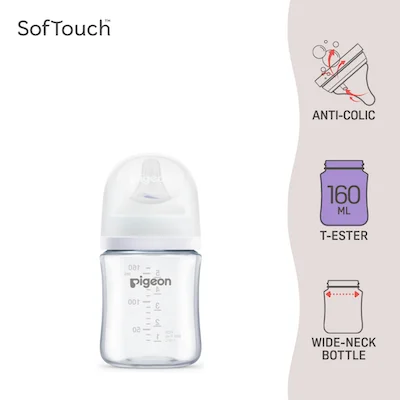
T-Ester is a newer bottle-grade polyester, chemically poly-cyclohexylene dimethylene naphthalate, developed as a heat-tolerant resin that stays transparent and non-crystalline rather than clouding the way some plastics do. Its total light transmittance of 89 to 91 percent is what gives finished bottles their glass-like look. In feeding bottles it behaves like a hybrid: as light and unbreakable as plastic, as clear as glass, and unusually stable under ultraviolet light. Pigeon’s SofTouch T-Ester nursing bottle is the version Malaysian parents will see, and the material is used under licence from Mitsubishi Gas Chemical.
Heat Resistance and Sterilising
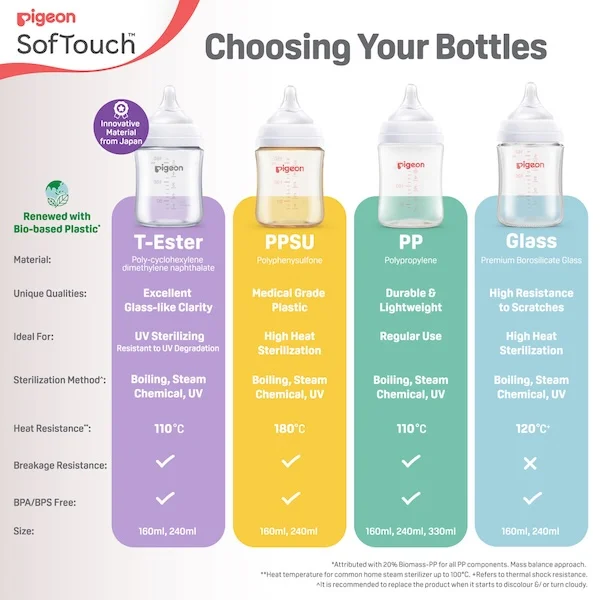
Heat resistance is where the materials separate most clearly, and manufacturer ratings are the practical guide. Pigeon rates its PPSU bottle body to 180 degrees Celsius, far above anything a home kitchen or steriliser will reach. In practice this means a PPSU bottle shrugs off boiling, steam sterilising and repeated warming without warping or clouding, which is why it suits parents who sterilise several times a day.
PP handles normal sterilising well but has a lower ceiling than PPSU, rated to 110 degrees Celsius on the bottle body, and it will show wear sooner over many high-heat cycles. It is perfectly safe for boiling, steam and cold-water sterilising, yet a heavily used PP bottle may need replacing more often than a PPSU one. Treat PP as a reliable workhorse rather than a lifetime bottle.
T-Ester carries the same 110 degree Celsius bottle rating as PP, which comfortably covers boiling water at 100 degrees, steam, chemical and UV sterilising. Its advantage is not a higher ceiling than PPSU but what happens over hundreds of cycles: it holds its clarity instead of yellowing. Pigeon’s own material testing reports that T-Ester remains unchanged after 100 hours of continuous UV sterilising, while PP shows visible degradation over the same exposure.
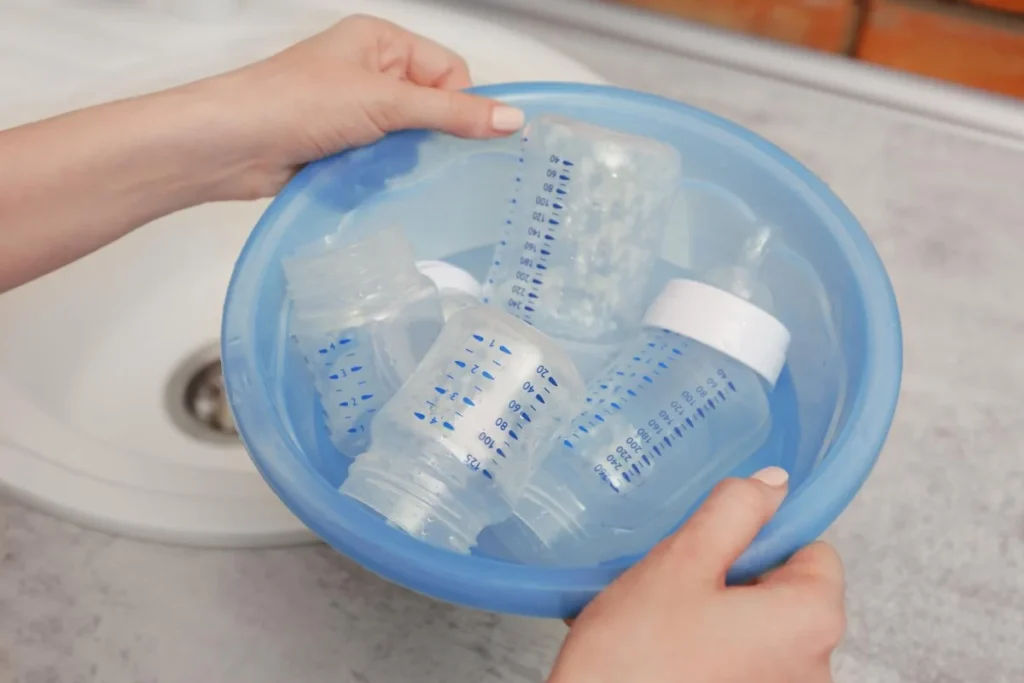
Glass tolerates repeated sterilising without material fatigue, since heat does not degrade it, and Pigeon rates its borosilicate bottle body to 120 degrees Celsius. The catch is thermal shock: pouring boiling water into a cold glass bottle, or the reverse, can crack it. Let glass come to room temperature before big temperature swings.
A useful piece of evidence sits behind all of this. Research published in Nature Food found that polypropylene bottles can release microplastics during formula preparation, and that the release rose sharply from 0.6 million to 55 million particles per litre as water temperature climbed from 25 to 95 degrees Celsius. The long-term health impact is still being studied, but the finding is a practical reason to cool boiled water slightly before mixing feeds and to favour a more heat-stable material if you sterilise constantly.
Which Bottle Material Suits a UV Steriliser?
UV sterilisers have become a common alternative to steam in Malaysian homes because they dry as well as sanitise, and they change the material calculation. Ultraviolet light does not soften plastic the way heat does; it breaks down polymer chains at the surface, which shows up as yellowing, chalkiness and fine cracks long before the bottle fails.
This is the specific problem T-Ester was chosen to solve. Its resistance to UV degradation is why Pigeon lists the T-Ester bottle as best suited to UV sterilising, while PPSU handles UV well and PP is the first of the three to show wear. Glass is unaffected by UV entirely, so the trade-off there remains weight rather than durability.
One handling note applies to every plastic bottle in a UV steriliser with a drying function. Keep the bottle body at least one inch, or 2.54 centimetres, away from the inner wall or ceiling where the hot air outlet sits, because concentrated hot air on one spot can deform plastic even when the material itself is rated for the temperature.
Safety and What Leaches
Safety is the question most parents ask first, and the reassuring news is that all the mainstream materials sold today are made without bisphenol A. Regulators moved on this years ago: the United States banned BPA in baby bottles and sippy cups in 2012, a step taken because manufacturers had already abandoned the use of BPA-based polycarbonate in those products. Any modern PPSU, PP or T-Ester bottle from a reputable brand is BPA free, and better ones are BPS free too.
Glass leads on chemical inertness. Because it does not react with its contents, it releases nothing into milk regardless of temperature, which is why it appeals to parents who want the simplest possible safety story. Paediatric guidance notes that glass is a sound alternative to plastic, with the main caveat being the risk of injury if a bottle is dropped or broken.
PPSU sits close behind glass on the safety scale while staying light and unbreakable. As a toxicologically inert, high-purity polymer, it does not impart taste or odour and withstands aggressive cleaning, which is exactly why the same material is chosen for reusable medical devices. T-Ester is likewise a stable, low-reactivity polyester already used for food and beverage containers, and it is supplied BPA and BPS free in feeding bottles. PP is safe too, and choosing an opaque number 5 plastic is precisely the direction health authorities recommend for plastic feeding items.
Weight, Durability and Daily Handling
Everyday practicality often decides the purchase once safety is settled. PP is the lightest of the three plastics and the cheapest, making it ideal for stocking several bottles, for travel, and for the stage when bottles are dropped constantly. Its trade-off is a shorter useful life under heavy sterilising.
PPSU is almost as light as PP and effectively unbreakable, combining the convenience of plastic with a lifespan closer to glass. It costs more than PP up front, but a single PPSU bottle can outlast several PP ones, which changes the value calculation for a bottle you use daily for a year or more. This blend of low weight and long life is the core reason premium wide-neck bottles are moving to PPSU.
T-Ester answers a different everyday complaint: seeing what is in the bottle. PPSU has a natural honey tint and PP goes cloudy with use, so parents who want to read milk levels at a glance in a dim room have historically had to accept the weight of glass. A T-Ester bottle gives that clarity at plastic weight and without the breakage risk, which makes it a natural pick for night feeds and for anyone tracking intake closely.
Glass is the heaviest and most fragile option, yet it is also the most scratch resistant and the easiest to see through for checking cleanliness. Many parents keep a couple of glass bottles for home use and reach for a lightweight plastic when out and about. There is no single winner; there is a best fit for each setting.
Whatever you choose, plastic and glass bottles alike have a service life. Pigeon advises replacing the bottle every four to six months, or sooner if it starts to discolour or turn cloudy, and replacing teats at least every two months.
How to Choose the Best Baby Bottle Material For You
Match the material to your real routine rather than to a spec sheet. If you sterilise many times a day and want one set of bottles to last, PPSU rewards the higher price with heat resistance and durability. If you want lightweight, budget-friendly bottles and do not mind replacing them periodically, PP is a dependable choice. If you rely on a UV steriliser, or you want glass clarity without glass weight, T-Ester is the closest fit. If chemical inertness matters most to you and weight is not a concern, glass is hard to beat at home.
Seeing the four materials side by side usually settles it faster than reading specs, which is why the same wide-neck bottle is offered in all four.
|
|
|
|
Whichever material you pick, the cleaning routine matters as much as the bottle. Health authorities advise cleaning feeding items after every use and sanitising at least once a day, which is especially important for babies under two months, born prematurely, or with a weakened immune system. A bottle that tolerates that routine comfortably, cycle after cycle, is the one that will serve you longest.
It also helps to think beyond the bottle body. The teat design shapes how your baby latches and feeds, so it is worth pairing your material choice with the right flow and shape. Our guide to choosing the right bottle teat for your baby walks through that decision, and if your little one is unsettled during feeds, understanding what an anti-colic bottle does can help you troubleshoot.
Feeding Made Calmer with Pigeon
Every material comparison eventually leads back to a simple goal: a calm, comfortable feed. Pigeon is a Japanese baby care brand with more than sixty years of feeding expertise, built around bottles, teats and mother-and-baby essentials designed to support natural latch and gentle feeding. Its widely trusted SofTouch range brings that thinking together in wide-neck bottles offered in PPSU, PP, glass and T-Ester, so the material decision made in this guide maps directly onto one bottle and teat system.
Parents choosing Pigeon get feeding products engineered for everyday Malaysian routines, from the peristaltic nipple that mimics a natural sucking motion to bottles that stand up to repeated sterilising. Heavy steam and boiling users tend to settle on the wide-neck PPSU bottle, while UV steriliser households and parents who want to see milk levels clearly reach for the T-Ester bottle. Both sit inside the same feeding bottle range, so teats, bottles and accessories work together rather than in isolation.
If a lightweight, durable bottle fits your routine, compare the Pigeon SofTouch wide-neck PPSU and T-Ester nursing bottles and build a feeding set around the one that matches how you sterilise.
Frequently Asked Questions
What is T-Ester in baby bottles?
T-Ester is a bottle-grade polyester, poly-cyclohexylene dimethylene naphthalate, used as an alternative to PPSU and PP. It is lightweight and unbreakable like plastic, offers glass-like clarity, and resists yellowing under UV sterilising. It is supplied BPA and BPS free and is rated for boiling, steam, chemical and UV sterilising.
Is T-Ester better than PPSU?
Neither is better outright. PPSU has the higher heat rating at 180 degrees Celsius against 110 for T-Ester, so it suits very heavy boiling and steam routines. T-Ester wins on clarity and on holding its appearance under UV sterilising. Choose PPSU for maximum heat headroom and T-Ester if you use a UV steriliser or want to see milk levels clearly.
Is PPSU better than PP for baby bottles?
PPSU is more heat resistant and more durable than PP, so it withstands repeated sterilising for longer without warping or clouding. PP is lighter on the wallet and perfectly safe, but tends to wear out sooner under heavy daily use. PPSU suits parents who sterilise often and want one long-lasting set.
Are PPSU baby bottles safe?
Yes. PPSU is a toxicologically inert, BPA-free plastic from the same polymer family used in reusable medical devices, and it does not impart taste, odour or leached material into milk under normal feeding and sterilising temperatures. It is one of the safest plastic options for baby bottles.
Are glass baby bottles better than plastic?
Glass is chemically inert and releases nothing into milk, which makes it excellent for safety, but it is heavy and can break or crack from thermal shock. Plastic bottles in PPSU, T-Ester or PP are lighter and unbreakable. Many parents use glass at home and plastic when travelling.
Which baby bottle material releases the least microplastic?
Glass releases essentially no microplastic because it is not a plastic. Among plastics, using a more heat-stable material and cooling boiled water before mixing feeds reduces release, since research shows microplastic shedding from polypropylene rises steeply with water temperature.
Do I still need to worry about BPA in baby bottles?
Modern baby bottles from reputable brands are made without BPA, and regulators such as the United States FDA formally removed authorisation for BPA in baby bottles back in 2012. Check for a BPA-free label, and choose PPSU, T-Ester, PP marked with recycling number 5, or glass.