Bath time is one of the sweetest rituals of the newborn stage, but it can also be one of the most nerve-wracking. Your baby’s skin is thinner, more delicate, and still developing its natural protective barrier, which means it loses moisture faster and reacts more easily to the wrong products or techniques. Getting bath time right isn’t just about the steps you follow; it’s also about choosing a baby wash and shampoo that are genuinely gentle enough for newborn skin. Here’s what new parents need to know.
When Can You Start Bathing Your Newborn?
Most paediatric guidelines recommend waiting at least 24 hours after birth before your baby’s first bath (or a minimum of 6 hours if needed for cultural or religious reasons). This gives vernix caseosa, the waxy white coating some babies are born with, time to be absorbed into the skin, where it acts as a natural moisturiser.
Until your baby’s umbilical cord stump falls off, usually within one to two weeks (and up to three weeks in some cases), stick to sponge baths rather than submerging your baby in water. Keeping the cord area dry helps it heal and separate naturally without irritation. If you’re still getting comfortable with newborn care, our guide on handling your newborn after giving birth covers the basics from head to toe.
How Often Should You Bathe a Newborn?
More isn’t better here. Two to three baths a week is generally enough for the first few months; bathing more frequently can strip away your baby’s natural oils and leave their skin dry. Keep this in mind in Malaysia’s warm, humid climate, where it’s tempting to bathe your baby daily to cool them down. Instead, spot-clean the face, neck folds, hands, and diaper area between full baths with a damp, soft washcloth.
A baby’s scalp needs even less: washing it once or twice a week with a mild, no-tears baby shampoo is usually sufficient, and it can help prevent cradle cap (the flaky, oily patches some babies develop).
What You’ll Need for Bath Time
Having everything within arm’s reach before you start makes the whole process calmer for both of you:
- A soft washcloth or sponge
- A baby bathtub, basin, or clean sink (for sponge baths, a flat, padded surface works too)
- A gentle baby wash formulated for newborns
- A mild, tear-free baby shampoo if your baby has hair
- A soft hooded towel (our piece on whether babies really need dedicated baby towels explains why they’re worth having)
- A fresh diaper and change of clothes
- A gentle baby lotion for afterward, if your baby’s skin tends to be dry
Step-by-Step: Sponge Bath (Before the Cord Falls Off)
- Warm up the room first, since newborns lose heat quickly.
- Lay your baby on a flat, padded surface like a changing table or towel-lined counter, and never leave them unattended, even for a second.
- Dampen your washcloth with warm (not hot) water and start with the face, then work down the body, avoiding the umbilical cord area.
- Clean the diaper area last, wiping girls front to back to avoid infection, and never forcing back the foreskin on an uncircumcised boy.
- Pat dry and keep baby wrapped in a towel between steps so they don’t get cold.

Step-by-Step: Tub Bath (Once the Cord Has Healed)
- Fill the tub with about 2 to 3 inches of warm water; around 37–38°C is ideal. Always test it on the inside of your wrist or elbow before placing your baby in.
- Support your baby’s head and neck firmly throughout; newborns are slippery when wet.
- Wash from top to bottom: scalp first with a small amount of baby shampoo, gently lathered and rinsed using cupped water while shielding the eyes, then the rest of the body with a mild baby wash, finishing with the diaper area.
- Keep the bath short: 5 to 10 minutes is plenty. Prolonged soaking can dry out newborn skin.
- Never add more hot water or turn on the tap while your baby is in the tub, and use a non-slip mat if bathing in a sink or adult tub.
How to Choose the Right Baby Wash and Shampoo
Newborn skin is more permeable than adult skin, which means it absorbs more of whatever touches it, and loses moisture faster too. That’s why it’s worth being deliberate about what goes into the bath, rather than reaching for whatever’s in the shower caddy. Look for:
- A pH-balanced formula that’s close to the skin’s natural pH, so it doesn’t disrupt the skin barrier
- A tear-free, no-sting formula, since accidental eye contact during rinsing is inevitable
- No parabens, sulfates, formaldehyde-releasing preservatives, or added alcohol (all common triggers for dryness or irritation on newborn skin)
- Minimal or skin-friendly fragrance, as heavy fragrance is one of the most common causes of newborn skin reactions
- Dermatological testing, ideally with claims specifically backed for newborn or sensitive skin use
- Gentle, nourishing ingredients like chamomile, olive oil, or oat extract that cleanse without stripping natural oils
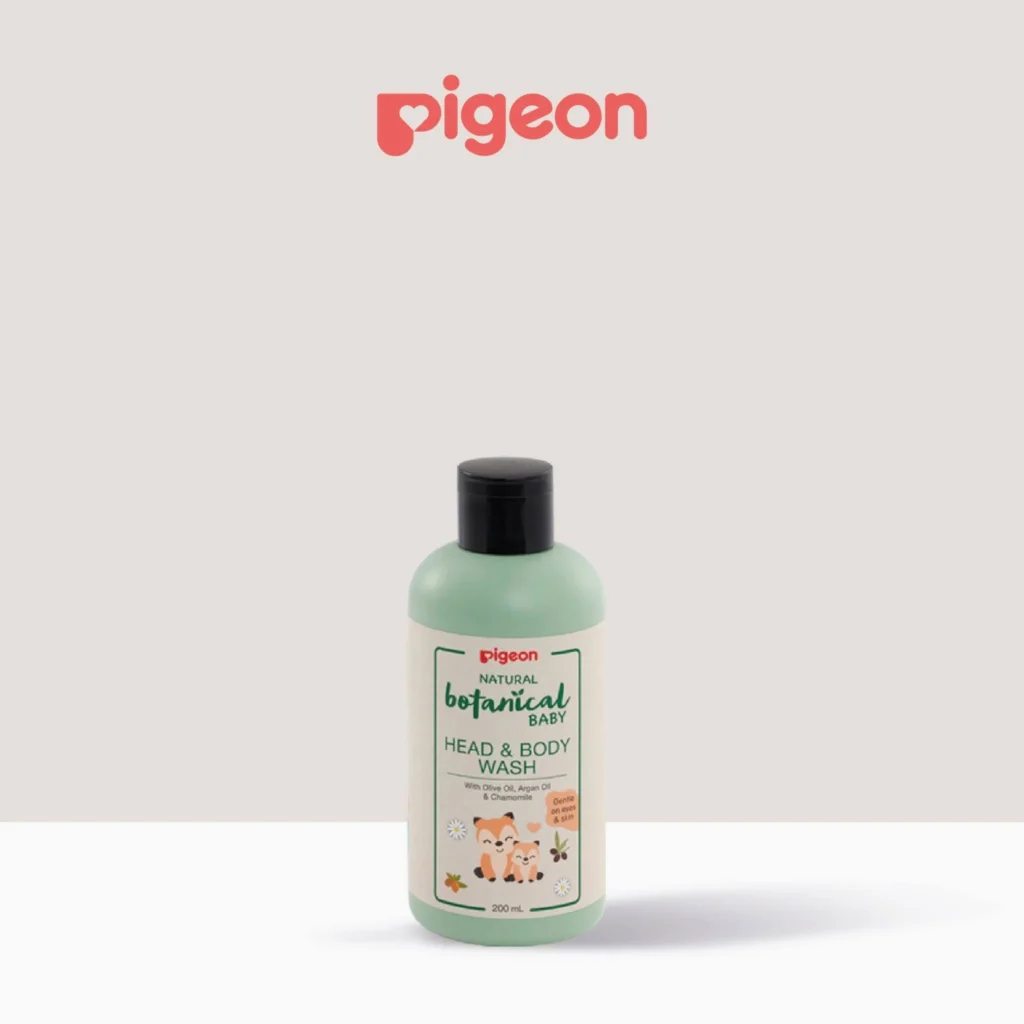
For example, Pigeon’s Natural Botanical Baby Head and Body Wash combines argan, olive, and chamomile extracts. Free from parabens, formaldehyde, and alcohol, this pH-balanced, dermatologically tested formula cleanses both hair and body in one gentle step.
If you’d rather keep hair and body care separate, a dedicated baby shampoo and baby body wash built on the same principles work just as well as part of a broader baby skincare routine. For a deeper look at what to check on the label, see our guide on choosing the right baby skincare products.
After the Bath: Drying and Moisturising
Pat your baby dry rather than rubbing; newborn skin is delicate enough that friction alone can irritate it. Pay extra attention to skin folds at the neck, armpits, and groin, where moisture likes to linger.
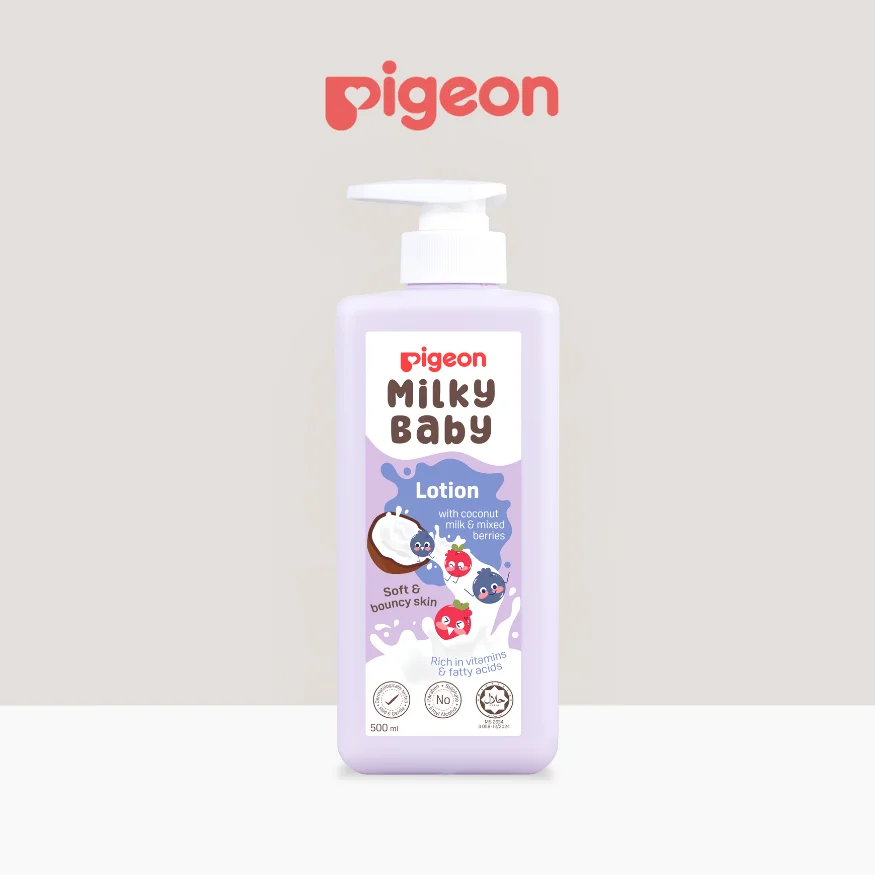
If your baby’s skin tends toward dryness, apply a small amount of baby lotion within a few minutes of the bath, while the skin is still slightly damp, to help lock in hydration. Not every newborn needs lotion daily, and some do fine without it in the early weeks; our article on when to start using baby lotion walks through how to tell. Pigeon’s baby lotion is formulated with shea butter, coconut milk, bilberry, and cranberry extracts, which help form a protective barrier on the skin’s surface to lock in moisture after bathing.
Special Care Areas
- Diaper area: Clean gently at every change, and make sure the area is fully dry before putting on a fresh diaper. A thin layer of diaper rash cream can act as a preventive barrier, or treat an existing rash if one develops; see our guide to choosing the best nappy rash cream for more on picking the right one.
- Cradle cap: A gentle massage with baby wash and a soft-bristled brush on the scalp can help loosen flakes over time. Avoid picking at them, as this can irritate the skin.
- Persistent redness or rashes: Some newborn skin changes are completely normal, but if something looks unusual or doesn’t improve, it’s worth a check with your paediatrician. Our overview of common skin problems among newborns can help you tell the difference.
Common Bath Time Mistakes to Avoid
- Bathing more than a few times a week “just to be safe”
- Using water that’s too hot instead of testing it first
- Stepping away from the bath or changing table, even briefly
- Using adult soap or shampoo, which is too harsh and the wrong pH for newborn skin
- Skipping a patch test when trying a new product for the first time
- Forgetting to support your baby’s head and neck at all times
- Rubbing the skin dry instead of patting it
- Waiting too long after the bath to moisturise dry-prone skin
Making Bath Time a Bonding Ritual with Pigeon
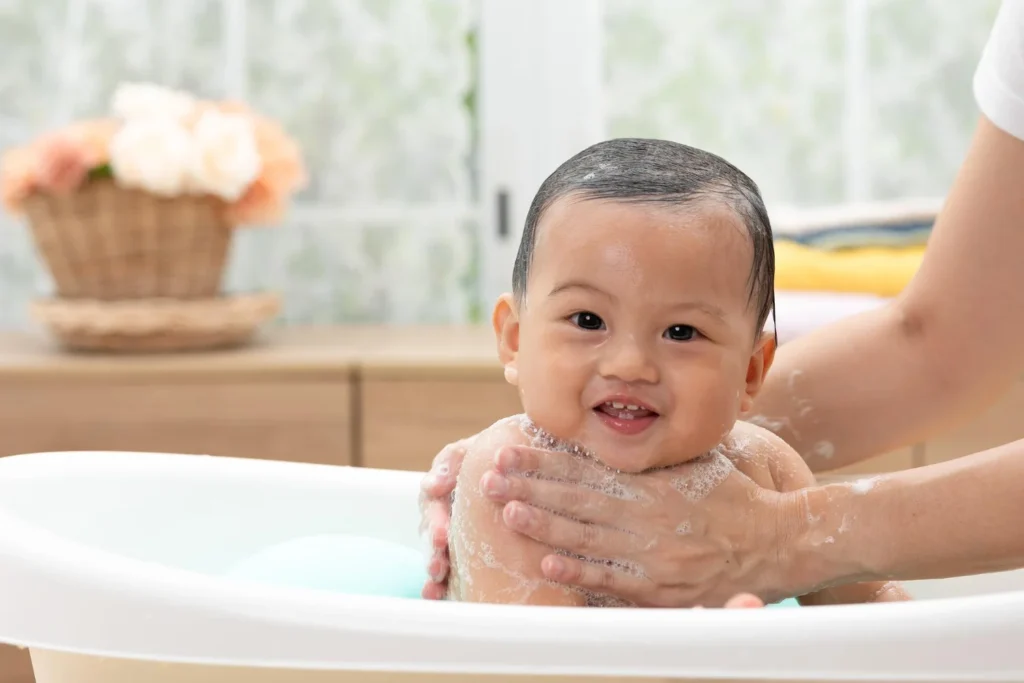
Bath time won’t feel this nerve-wracking forever. As your baby grows more used to the water and you get more comfortable with the routine, it often becomes one of the calmest, most bonding parts of the day. Choosing gentle, well-formulated products for the skin your baby’s still growing into is one less thing to worry about along the way.
Ready to build a gentle bath time routine? Explore Pigeon’s Natural Botanical Baby range for dermatologically tested wash, shampoo, and lotion made for newborn skin.
Frequently Asked Questions
What do you wash first on a newborn?
Start with the face using plain warm water and a clean, damp washcloth, then work downwards over the body, and clean the diaper area last. In a tub bath, wash the scalp early with a small amount of baby shampoo so your baby is not sitting in the water longer than needed. Washing top to bottom keeps the cleanest areas clean.
What water temperature is right for a newborn bath?
Around 37 to 38°C, which feels warm but not hot. Fill the tub with about 2 to 3 inches of water, then test it on the inside of your wrist or elbow before lowering your baby in. Never top up with hot water or turn on the tap while your baby is in the tub.
Is it safe to use baby shampoo (sabun baby) on newborn hair?
Yes, as long as it is a mild, tear-free formula labelled safe for newborns and free from parabens, sulfates, and added alcohol. Babies produce very little scalp oil in the early weeks, so one to two washes a week is usually enough, and it also helps keep cradle cap in check.
How do I treat cradle cap during bath time?
Loosen the flakes gradually rather than removing them at once. Massage a mild baby wash into the scalp, work through with a soft-bristled brush, then rinse thoroughly. Repeat over several baths and avoid picking at the patches, since that irritates the skin underneath. Most cases clear on their own within a few months.