A nasal aspirator clears a baby’s blocked nose by drawing softened mucus out of the nostrils with gentle suction, which is the only practical option when a baby is too young to blow their own nose. Used after a drop or two of infant saline, and no more often than the congestion calls for, it is a safe and drug-free way to help a baby feed and sleep through a cold.
Any Malaysian parent knows the 3am version of this. The baby snuffles, pulls off the bottle every few seconds to catch a breath, and wakes almost hourly. Colds are frequent in the first two years, and air-conditioned bedrooms and haze season both dry out the nose.
Why Nasal Congestion Affects Babies More than Adults
A newborn’s nasal passages are narrow, so an amount of mucus an adult would barely notice can restrict airflow. Young babies also breathe mainly through the nose in the early months, which is why congestion disrupts feeding so much more than it does later. The baby stops sucking to breathe, and the feed becomes exhausting.
Start With Saline, Not Suction
Suctioning a dry, sticky nose is uncomfortable and ineffective, so soften the mucus first. Use an infant saline drop or spray with no added medication, lay your baby on their back, put one to two drops into each nostril, and wait 30 to 60 seconds.
Saline is gentle enough for several times a day. The U.S. Food and Drug Administration (FDA) notes that saline nose drops or spray keep nasal passages moist and help avoid stuffiness. If your baby dislikes the aspirator, try saline alone first, because mild congestion often needs nothing more.
How to Use a Nasal Aspirator, Step by Step
Clinical guidance is consistent on the order: apply saline first so the mucus loosens, then suction.
- Ensure your hands are washed and the aspirator is clean and dry.
- Lay your baby on their back or hold them semi-upright while speaking calmly.
- Administer 1 to 2 saline drops per nostril and wait 30-60 seconds.
- Prepare the suction before the tip goes near the nose. Squeeze the air out of a bulb, or ready the mouthpiece of a tube type.
- Place only the tip inside the entry of the nostril, angled slightly towards the cheek. Never insert deep into the nose.
- Apply suction slowly to draw out mucus, then clear the contents into a tissue.
- Repeat on the other nostril.
Go gently, and stop when your baby has had enough. A struggling baby will not let you do a good job anyway.
How Often Can You Suction a Baby’s Nose?
As often as your baby genuinely needs, which is usually fewer times than parents expect. Before feeds and before sleep covers the moments that matter most, so three or four times a day during a cold suits most babies.
The limit is the nose, not the clock. The lining is delicate, and repeated suctioning irritates it, causing swelling that makes congestion feel worse and can produce a little bleeding. If the nostrils look red and raw, use saline alone for a day.
How Do You Clean a Nasal Aspirator?
Take the aspirator apart after every use, wash the parts in warm soapy water, and air dry them completely, tip down, before reassembling. Keep one per child, and check the instructions before sterilising, since not every material tolerates boiling.
Safe Sleep and What to Avoid
However blocked the nose is, your baby still sleeps on their back on a firm flat surface. The American Academy of Pediatrics states that babies who sleep on their backs are much less likely to die suddenly and unexpectedly, and that any surface inclining more than 10 degrees is not safe. No propped mattresses, pillows, wedges or car seats for sleep.
Skip the medicine too. The FDA is explicit that children under 2 should not be given any cough and cold product containing a decongestant or antihistamine. A cool-mist humidifier does more good, and a little baby skincare cream soothes the sore skin under the nose. If feeds are unsettled, it helps to know what an anti-colic bottle does so you can tell congestion from swallowed air.
When to See a Doctor
Congestion from a cold usually improves within a week to ten days. Seek advice if your baby is under three months with a fever, is feeding much less than normal, or has a dry nappy for 12 hours or more. Get emergency help for grunting noises or the tummy sucking in under the ribs, pauses in breathing, or lips turning blue or grey.
Discover Pigeon Nasal Care Solutions
Pigeon is a Japanese mother and baby care brand founded in 1957 and trusted by families in over 40 countries, with Pigeon Malaysia as its local arm. Decades of infant research sit behind a catalogue built on BPA-free and BPS-free materials, dermatologically tested formulas and paediatrician co-developed designs, and that attention to a baby’s scale shows in the smallest tools we make.
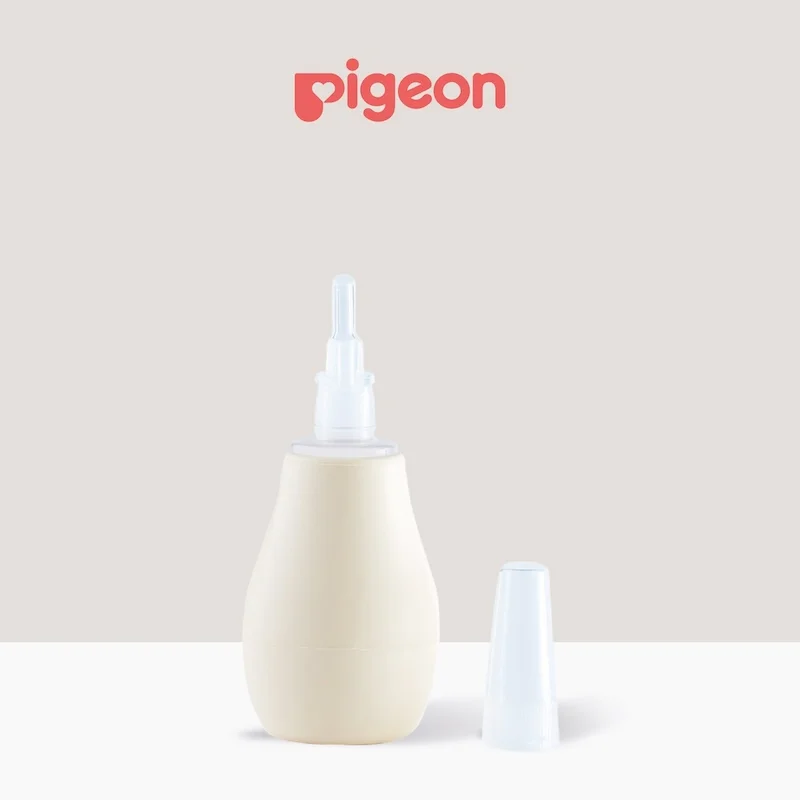
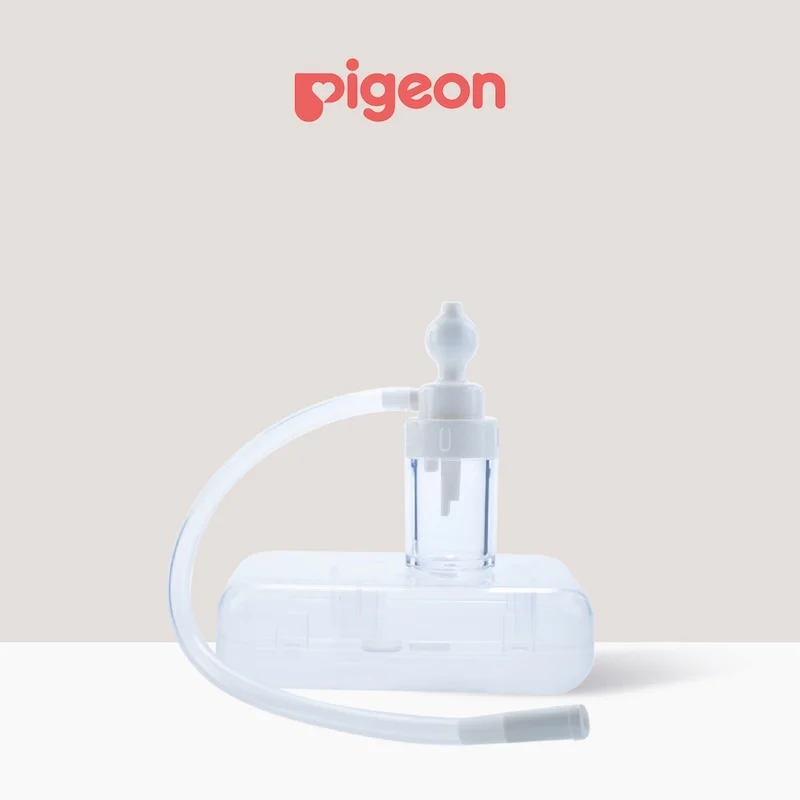
| Feature | Nose Cleaner (Bulb Type) | Nose Cleaner (Tube Type) |
| Suction Control | Manual bulb squeeze | Parent-controlled oral suction |
| Best For | Quick, one-handed suctioning | Adjusting suction strength and transparent chamber to inspect mucus |
| Portability | Includes protective nozzle cap for storage. | Includes transparent travel case for storage. |
| Cleaning | Disassemble parts and flush under warm running water. | Disassemble parts and flush under warm running water. |
Our nasal aspirators come in two forms: the bulb type nose cleaner and the tube type nose cleaner, both sized for an infant nostril and built to come apart for washing. Keep one at home and one in the changing bag.
Frequently Asked Questions
Is a nasal aspirator safe for babies?
Yes, used gently. Insert only the tip just inside the nostril, apply slow suction, and stop if the nose looks sore. The risk comes from suctioning too hard or too often, not from the device itself.
How often should I suction my baby’s nose?
Three to four times a day is enough for most babies during a cold, timed around feeds and sleep. Let the state of the nose guide you rather than a fixed schedule.
Can I use a nasal aspirator while my baby is sleeping?
Better not to. Most babies wake, and a startled baby may move suddenly while the tip is in the nostril. Suction just before a feed or before settling them instead.
Sources
- U.S. Food and Drug Administration – Use Caution When Giving Cough and Cold Products to Kids
- Cleveland Clinic – How To Use a Nasal Aspirator To Prevent Phlegm in Your Baby’s Throat
- NHS – Bronchiolitis
- American Academy of Pediatrics (HealthyChildren.org) – How to Keep Your Sleeping Baby Safe: AAP Policy Explained
- American Academy of Pediatrics (HealthyChildren.org) – How to Care for Your Child’s Cold
Medical Disclaimer: The information provided in this article is for educational purposes only and is not a substitute for professional medical advice, diagnosis, or treatment. Always consult a certified doctor, paediatrician, or lactation consultant for any medical or feeding concerns.